

Understanding Childhood Trauma: Debra Wesselmann’s Attachment Trauma in Kids Offers Strategies for Healing & Connection

The updated and expanded guide helps parents and caregivers understand trauma-related behaviors, build trust, and foster healthier family relationships.
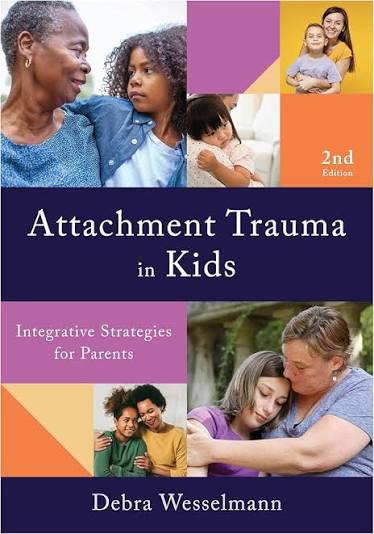
LOS ANGELES,, CA, UNITED STATES, October 19, 2026 /EINPresswire.com/ -- When children experience trauma early in life, the effects can extend far beyond the original experience, influencing how they respond to stress, form relationships, regulate emotions, and view themselves and the world around them. For parents and caregivers, these behaviors can be confusing, exhausting, and hard to navigate. In her updated book, Attachment Trauma in Kids: Integrative Strategies for Parents, Second Edition, author and mental health practitioner Debra Wesselmann offers a compassionate, research-informed resource to help families understand these challenges and take meaningful steps toward healing.
Published by W. W. Norton & Company in December 2025, the expanded edition builds on Wesselmann’s earlier work, originally published as Integrative Parenting. The book brings together insights from attachment theory, trauma research, neurobiology, and child development to provide practical strategies for parents raising children affected by early adversity and attachment trauma.
Rather than viewing difficult behaviors solely as problems to correct, Wesselmann encourages caregivers to consider how a child's experiences may influence their reactions, beliefs, and ability to trust. Mistrust, impulsivity, emotional reactivity, and difficulty communicating can create significant obstacles in family life. Understanding the underlying causes of these behaviors can help parents respond with greater empathy, consistency, and effectiveness.
“Children who have experienced early trauma may struggle with trust, emotional regulation, and a sense of safety in their relationships” is a central theme of Wesselmann’s work. By helping caregivers recognize these challenges through a trauma-informed lens, the book offers a path toward stronger connections and more supportive family environments.
The Lasting Impact of Childhood Trauma
Childhood trauma can take many forms, including abuse, neglect, exposure to violence, sudden loss, serious illness, and other frightening or overwhelming experiences. According to the Substance Abuse and Mental Health Services Administration (SAMHSA), more than two-thirds of children report experiencing at least one traumatic event by age 16. Children's responses vary, and not every child who experiences trauma develops lasting difficulties. However, some children experience traumatic stress that affects their emotional well-being, behavior, learning, and relationships.
For children affected by early relational trauma, the consequences may be particularly challenging when their experiences have disrupted their ability to feel safe with the adults responsible for caring for them.
A child who appears defiant, impulsive, withdrawn, or unusually reactive may be responding to perceived danger rather than deliberately attempting to create conflict. Ordinary situations, including a change in routine, a parental correction, or a moment of separation, may trigger feelings tied to earlier experiences.
Trauma can also contribute to negative beliefs about oneself and others. Children may come to believe they are bad, unworthy, or incapable of being loved. They may expect others to hurt or disappoint them, making it difficult to accept comfort, rely on caregivers, or develop confidence in relationships.
These patterns can create a cycle in which a child's distress prompts an adult's frustration, which in turn increases the child's sense of threat. Breaking that cycle begins with understanding what may be driving the behavior and creating opportunities for safety, connection, and emotional growth.
Hope for Children and the Adults Who Care for Them
Wesselmann, MS, LIMHP, has more than three decades of experience specializing in attachment trauma and developing integrative approaches to treatment. She is a co-founder of the Attachment and Trauma Center of Nebraska, a trainer with the EMDR Institute, and the lead creator of the Integrative Attachment Trauma Protocol for Children (IATP-C). Her work bridges clinical knowledge and practical guidance for families navigating the effects of early adversity.
Her broader professional work includes research, clinical publications, and training for mental health practitioners. Through her parent-focused writing, Wesselmann seeks to make trauma-informed knowledge more accessible to the people who play a critical role in children's everyday lives.
The message is particularly relevant for foster and adoptive parents, caregivers of children who have experienced neglect or disrupted attachments, and families navigating the effects of early adversity. It is also valuable for adults seeking a better understanding of why a child may struggle to accept care, manage emotions, or feel secure in relationships.
While a book cannot replace individualized professional care, it can help parents recognize when additional support may be beneficial and provide a foundation for more informed conversations with qualified mental health professionals. Children experiencing persistent or severe trauma-related difficulties may benefit from an assessment and treatment tailored to their individual needs.
Ultimately, Wesselmann's work offers an important reminder: a child's challenging behavior does not have to define the child's future. With informed caregiving, appropriate therapeutic support, and opportunities to develop safe and dependable relationships, children can build new skills and experience meaningful progress.
“Traumatized kids and their parents deserve a better future together,” reflects the book's central message. For families who feel overwhelmed by the effects of early trauma, Attachment Trauma in Kids offers practical guidance, a deeper understanding of children's needs, and renewed hope for stronger connections.
About the Book
Attachment Trauma in Kids: Integrative Strategies for Parents, Second Edition, by Debra Wesselmann, is an expanded and updated guide for parents and caregivers raising children affected by attachment trauma and early adversity. Integrating the science of attachment, trauma, neurobiology, and child development, the book provides practical strategies for building trust, reducing reactivity, supporting emotional regulation, and improving communication. The second edition includes updated guidance on neurodivergence and prenatal substance exposure and features four black-and-white illustrations.
Publisher: W. W. Norton & Company
Publication: December 2025
About Debra Wesselmann
Debra Wesselmann, MS, LIMHP, is a mental health practitioner, author, researcher, and educator specializing in attachment trauma. With more than 30 years of experience, she has developed and taught integrative approaches to trauma treatment and family therapy. She is a co-founder of the Attachment and Trauma Center of Nebraska, a trainer with the EMDR Institute, and the lead creator of the Integrative Attachment Trauma Protocol for Children (IATP-C). Her books and professional training help clinicians, parents, and caregivers better understand attachment difficulties and support healing across the lifespan.
To learn more, please visit: https://www.debrawesselmann.com/
Amanda Kent
Boundless Media USA
+1 313-403-5636
Legal Disclaimer:
EIN Presswire provides this news content "as is" without warranty of any kind. We do not accept any responsibility or liability for the accuracy, content, images, videos, licenses, completeness, legality, or reliability of the information contained in this article. If you have any complaints or copyright issues related to this article, kindly contact the author above.
